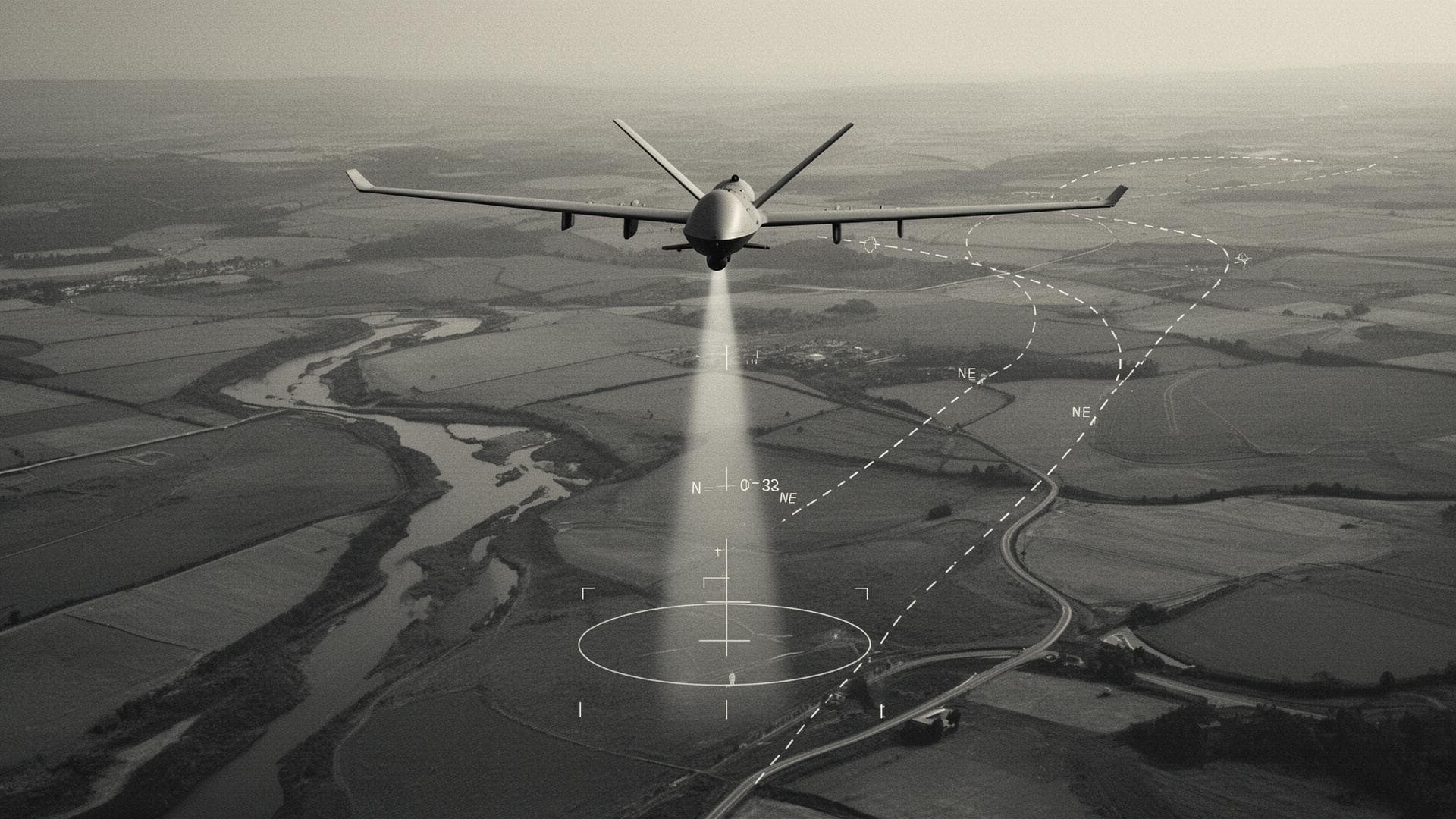
Dual-use navigation software for GPS-denied environments.
ONS · Optical Navigation SystemIn active development
13–19 mtypical position errorGPS excluded from the solution110–280 m AGL, daylightGPS fails in contested environments.
When GPS is denied, autonomous platforms lose absolute position. They drift, return, or are lost.
- Jamming
- Signal flooded across GNSS bands.
- Spoofing
- False coordinates injected mid-flight.
- Outage
- Mission aborted. Asset lost.
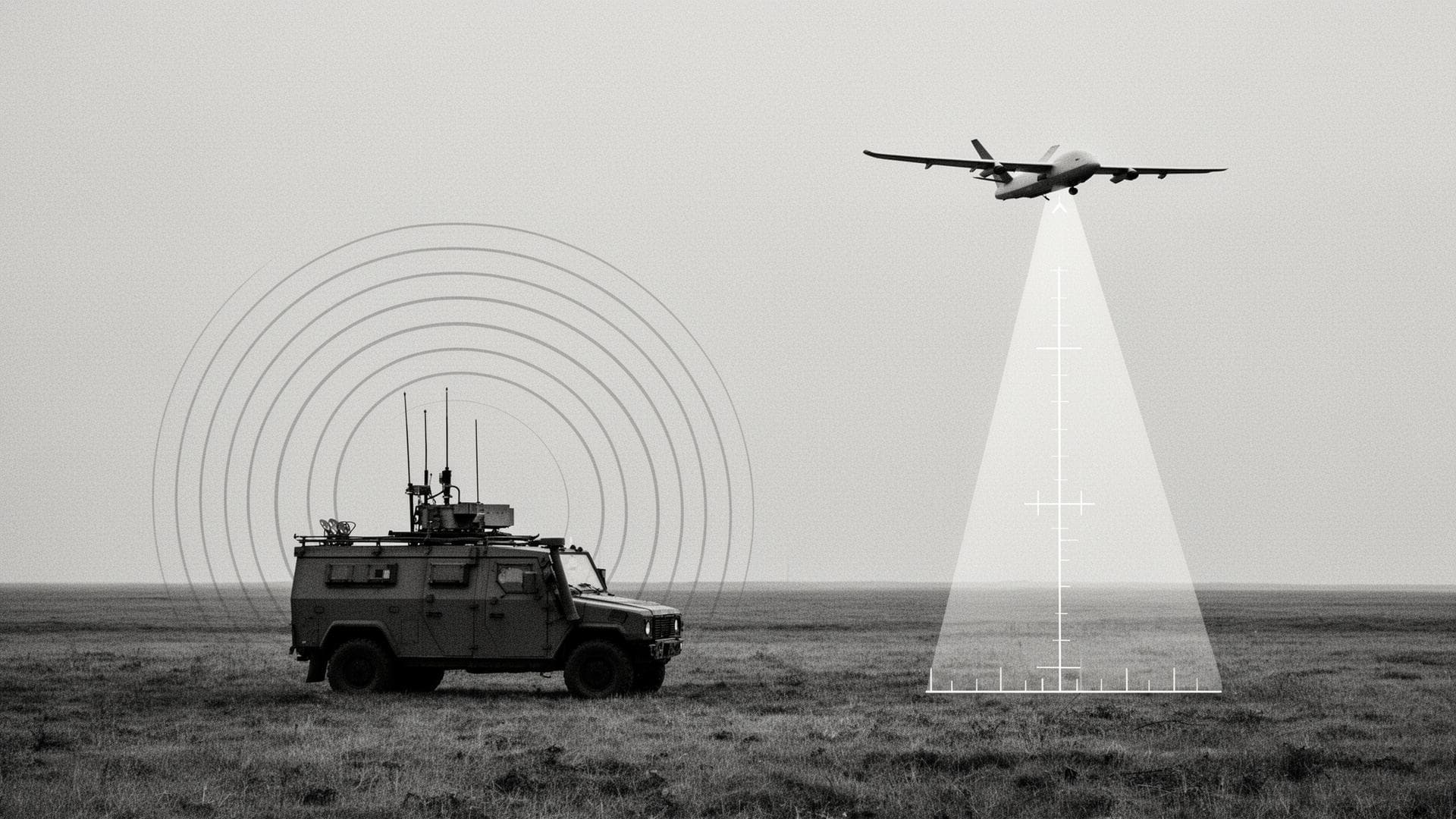
Optical terrain-matching. No satellite signal. No survey flight.
Navigation software for autonomous systems, in defence and civil use: assured PNT, logistics, BVLOS, critical infrastructure.
- Camera
- Map match
- Fusion
- Position
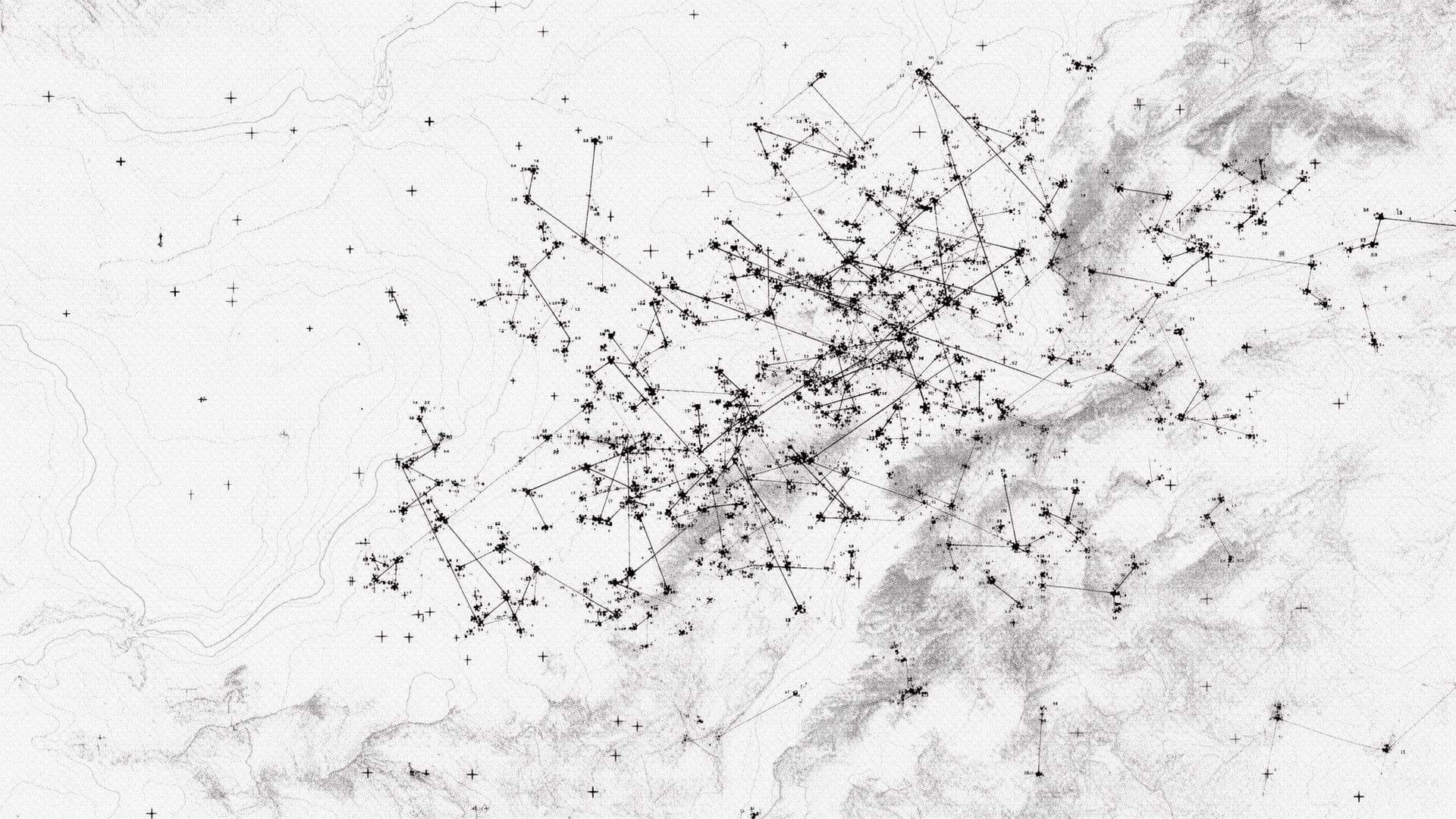
Over an hour of flight with no satellite input to the solution, inertial drift of 306 m was held to 7.5 m.
A downward-facing camera matches the terrain it observes against ordinary public satellite imagery to compute absolute position, independently of GPS.
The operating area needs no fresh aerial survey and no proprietary map product, and the imagery does not need to be current.
The camera is passive, so there is no RF emission for electronic-warfare receivers to detect or target.
Delivered as a software module for open-standard autopilot stacks.
Measured in flight, with GPS excluded from the solution.
Inertial navigation alone drifts without bound. The test below ran with no satellite input of any kind in the calculation — the optical fix is what holds the error down.
Satellite positioning was not used in the calculation
- Daylight, clear conditions
- 110–280 m above ground level
- Lowland terrain — river floodplain and fields
- GPS recorded in parallel as the error reference only, never as an input
- Position is re-established on a third to a half of frames; the system holds course between fixes
Our own models, trained on our own flights.
Every sortie adds to the flight archive the models are trained on.
Four trained model versions cover different operating conditions, backed by an archive of thousands of prepared examples drawn from our own sorties.
The training transfers to unfamiliar ground. Measured against an untrained baseline over terrain hundreds of kilometres from anywhere our models had flown, our version found more positions and halved the error.
Preparing a new sortie for training is automatic, so the archive grows with the flying we already do.
Models are retrained on a schedule we set, and every release is validated before it ships. The model does not modify itself in flight: a model that rewrites itself mid-mission cannot be audited or certified.
Operational characteristics.
GPS-Independent
Operates without satellite signal, and keeps a fix through the active jamming and spoofing that leave conventional autonomy without a position.
No Survey Required
Matches against ordinary public satellite maps. No fresh aerial survey of the operating area, and the imagery does not need to be current.
Absolute Position
Computes true position from what the camera sees, rather than a relative estimate that drifts.
Zero RF Signature
No emissions for electronic-warfare countermeasures to detect or target.
Autopilot Integration
Integrates with open-standard autopilot stacks. The only sensor it adds is a downward-facing camera.
- Altitude
- 110–280 m above ground level
- Conditions
- Daylight, clear weather
- Terrain
- Lowland and rural
- Sensor
- Downward-facing camera
- Compute
- Jetson-class onboard GPU module
- Autopilot
- Open-standard stacks
Core algorithm validated in flight. Onboard integration underway.
Each phase completes before the next begins.
- Algorithm validationComplete
Core algorithm validated on real flight data across multiple routes. GPS-free positioning demonstrated in post-flight analysis.
- Onboard computeCurrent
Integration onto the onboard module, with embedded performance validation.
- Autopilot integrationPlanned
Shadow-mode flights on open-standard stacks, logging alongside GNSS.
- Denied-GNSS trialsFuture
Flight trials with the satellite signal denied, through to a field-ready prototype.
FLY BY is a product of GISPOINT (United Kingdom). The programme is funded through pre-seed equity and planned applications to non-dilutive defence-innovation and dual-use funding programmes.
Defence beachhead. Civil and commercial expansion as the technology matures.
- ISR platforms
- GPS-denied reconnaissance missions.
- Deep-strike UAVs
- Long-range autonomous targeting.
- Light aviation
- GNSS-loss backup navigation.
- Swarm formations
- Coordinated multi-platform operations.
- Assured PNT
- Resilient PNT for critical infrastructure.
- Logistics & BVLOS
- Beyond-visual-line-of-sight cargo and survey.
- Civil aviation backup
- GNSS-loss fallback for crewed and uncrewed flight.
- Emergency response
- Search, rescue, and mapping in degraded RF.
Three founders. Five years working together.
60+ combined years in geospatial, navigation, and UAV systems.
Built a national-scale cartography company 2016–2023. Founded GISPOINT (United Kingdom), maker of FLY BY.
10+ years scalable software systems. Owner of ONS algorithms — map-matching, IMU fusion, and open-standard autopilot stack integration.
PhD, 30+ years navigation and UAV systems. Built and exited a prior UAV company. Chair, All-Ukrainian AeroGeodetic Association.
Working together on geospatial production since 2021.
Defence procurement, or investment.
One form for both. We reply with a one-page brief and a current status note, under NDA on request.
- Defence procurement
A capability brief and a current status update, under NDA.
- Investors
An investor brief and data-room access, under NDA. The pre-seed round is open.